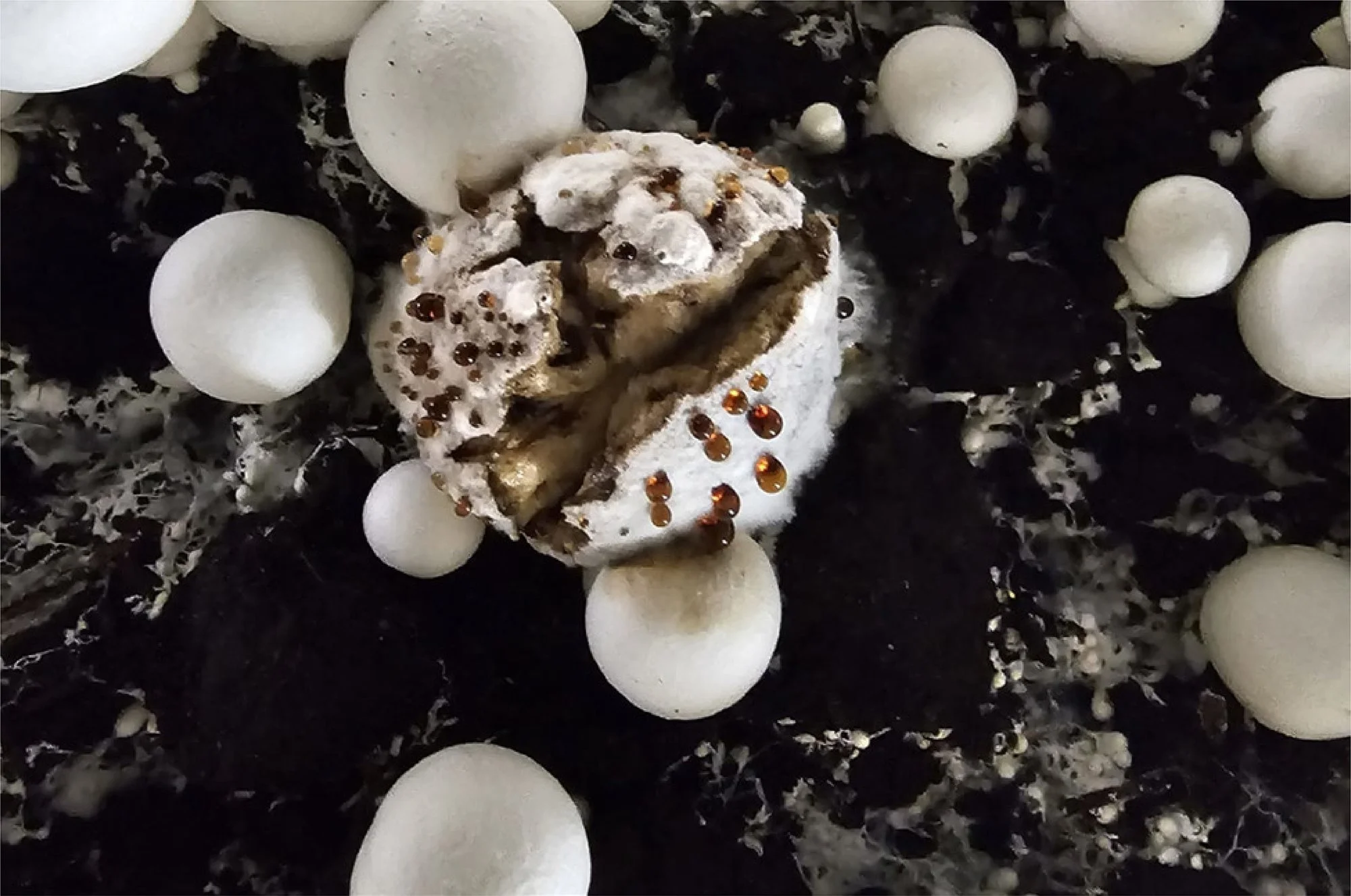
Wet bubble - Cause and control
Wet bubble disease, caused by fungi in the genus Mycogone, is a global disorder of cultivated Agaricus bisporus.
It mainly affects developing pins and young mushrooms, resulting in distorted growth, spongy undifferentiated tissue masses (when affected mushrooms are prevented from forming stem, cap and gill tissue), and wet rot. In severe infections, affected mushrooms collapse into foul-smelling masses leading to significant yield losses and reduced quality.
Within the Australian mushroom industry, wet bubble is a generally sporadic disease with outbreaks associated with lapses in farm hygiene, contaminated casing operations, ineffective grow room exclusion and environmental conditions favourable to the pathogen such as low airflow and high humidity.
Unchecked infections can spread rapidly within a crop so wet bubble remains a high priority disease for Australian growers (SARP 2022) with effective control dependent upon early recognition, rigorous hygiene, careful casing management and integration of chemical and cultural management strategies – the basic applied principles of integrated pest and disease management (IPDM)