

Growing and tech resources
Explore resources related to mushroom harvesting, breeding, growing, compost and sustainability.
Explore the growing and technology resources by clicking the links below
Harvest


GTL Europe’s tilting shelf harvesting system is designed to improve the efficiency of picking by allowing pickers to see the bed and use both hands to harvest mushrooms. It also takes trimming and packing out of the growing room. The system has now been refined further, with new tools soon coming online for both brand new growing rooms and those wanting to retrofit an existing farm.

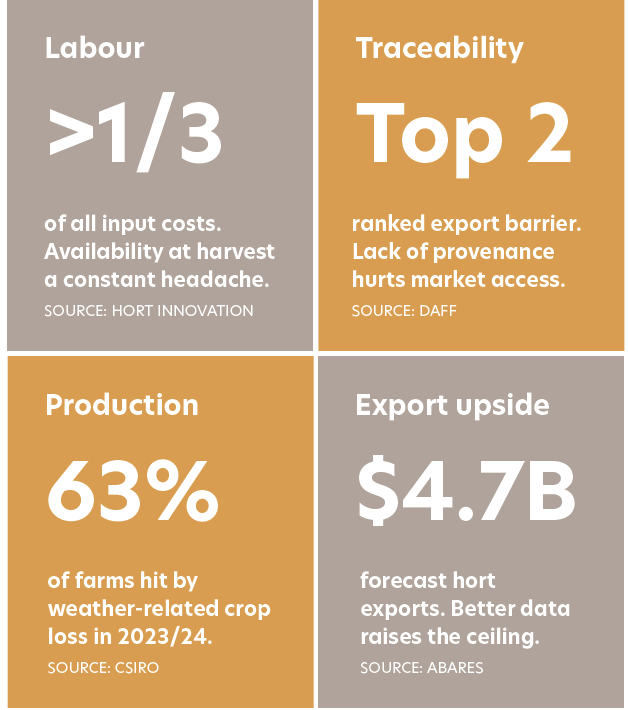
Mushroom farms world over struggle with labour shortages. The work is difficult and the conditions sometimes uncomfortable. In Canada, this challenge is not a recent one with the farming industry struggling with workforce shortages for at least ten years. Thanks to the revolutionary advances in technology, automation has emerged as a very real and viable solution.
Paulette Baumgartl and Dr Jenny Ekman spoke to the team behind an intelligent solution.

Breeding

Breeding mushrooms presents significant challenges. Improvements in quality and productivity have largely been achieved through better growing techniques, with breeding playing only a minor role. So how do you 'cross pollinate' a mushroom, as Mendel did with his famous peas? Dr Jenny Ekman investigates.
Growing

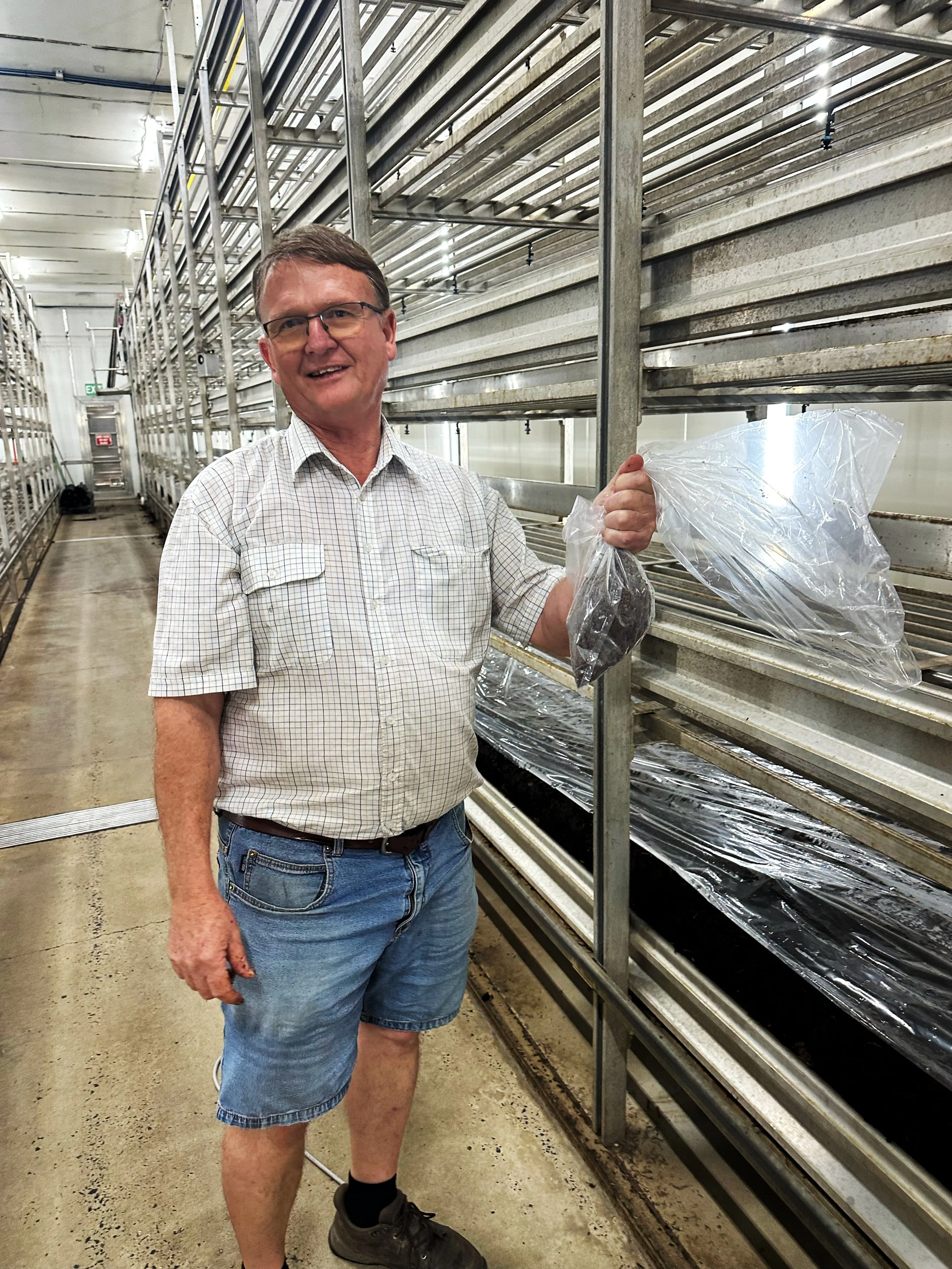
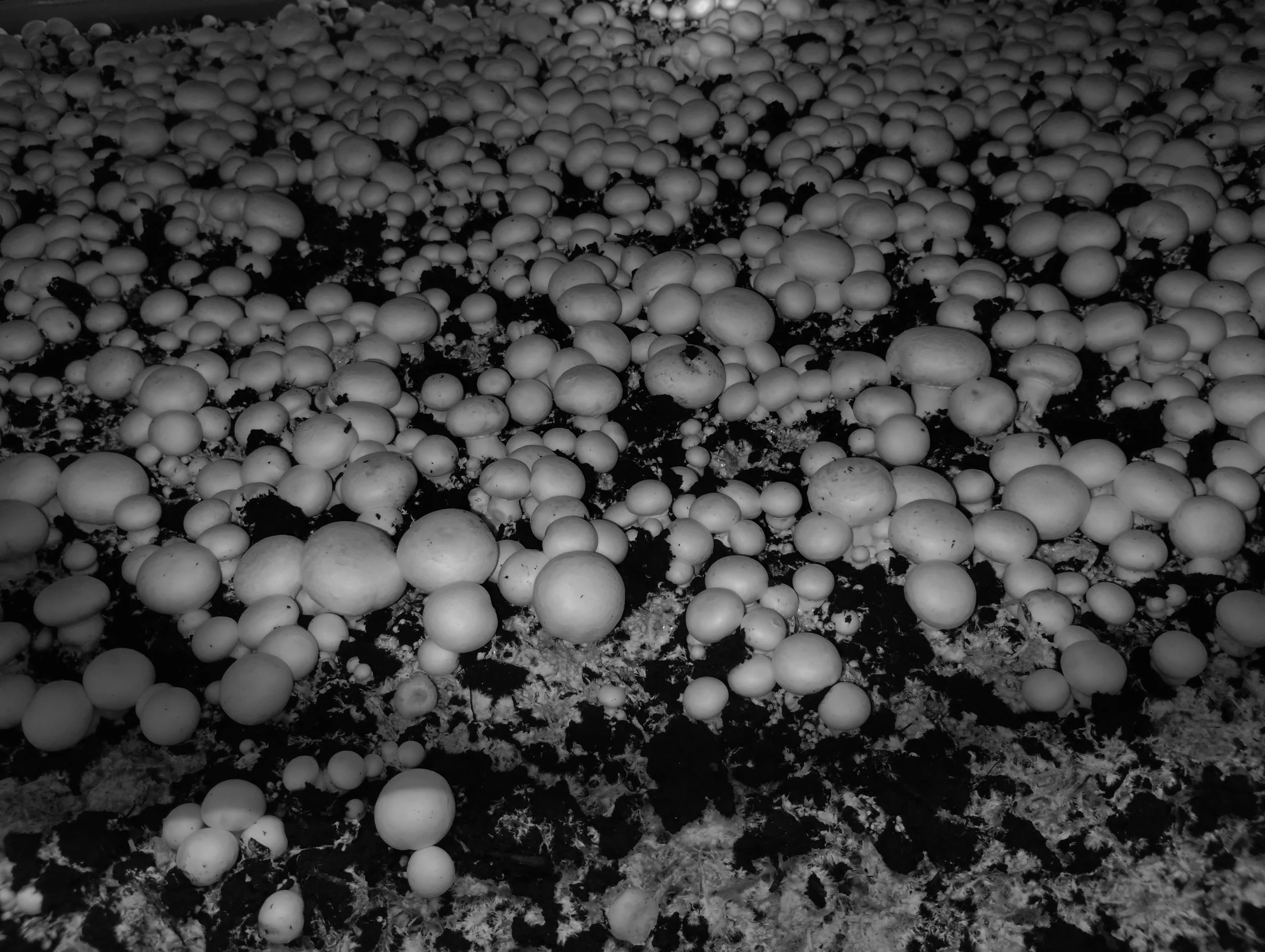


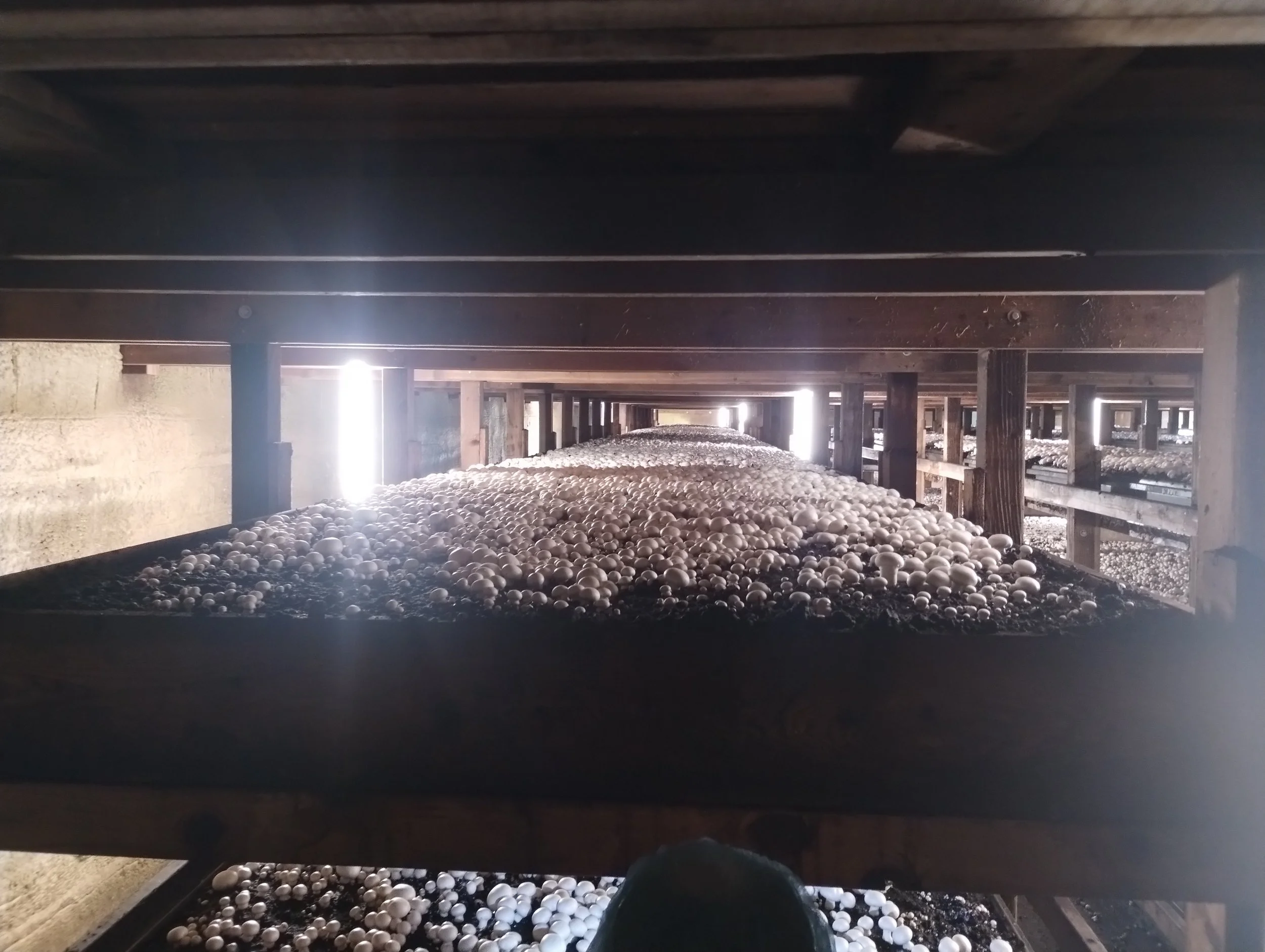


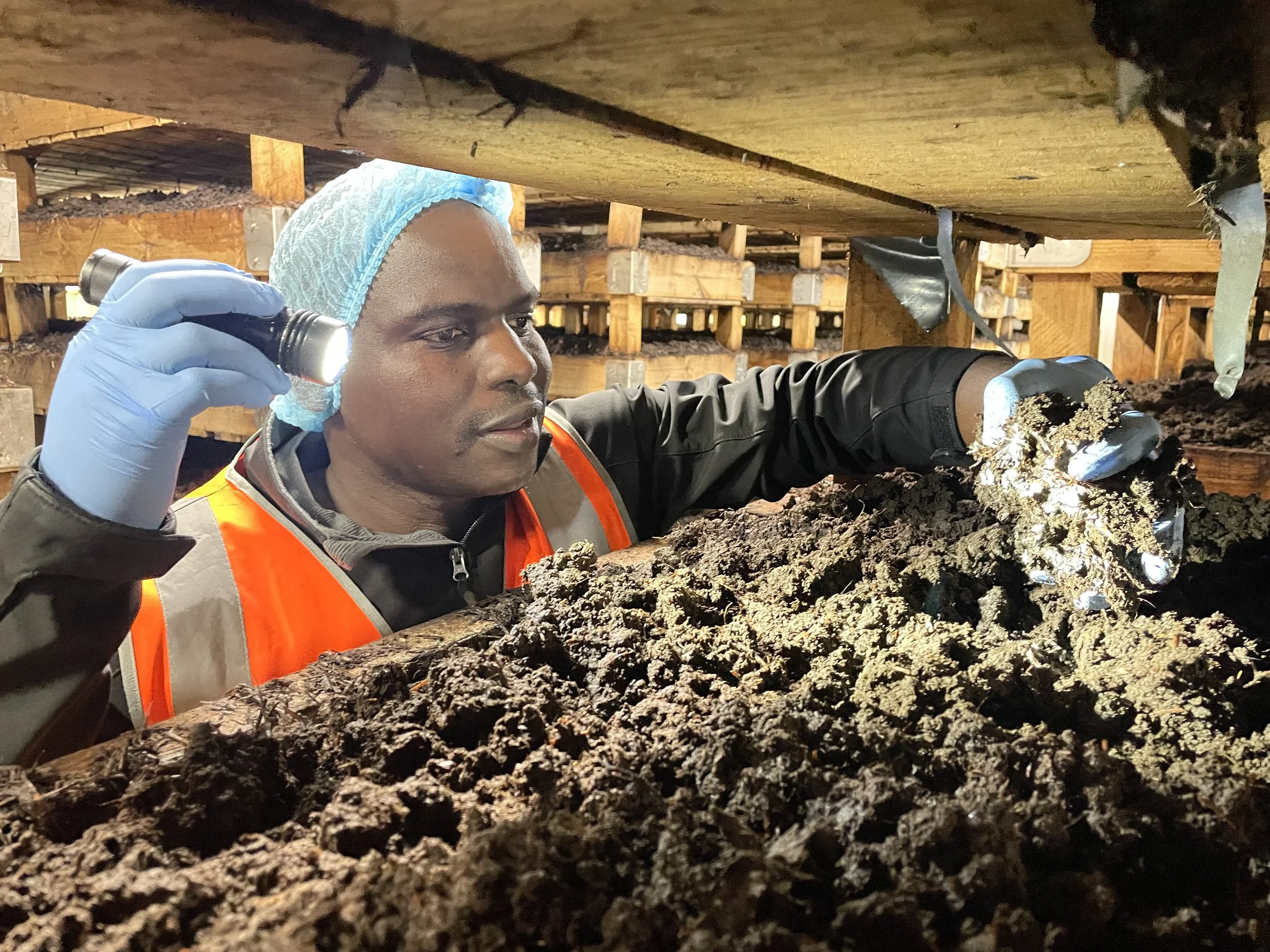


Combining an interest in mycology with 30 years’ experience as a mathematician, grower John Ward was eager to apply his knowledge in the growing rooms of his exotic mushroom farm nestled in Victoria’s high country. John has helped developed AI technology that can monitor mushroom growth stages through image recognition and sensors.

One of the highlights of the recent ISMS Conference in Las Vegas was the opportunity to meet senior researcher Dr Nancy Pyck, and hear about some of the work they have been conducting at the amazing INAGRO Facility in Belgium. I had a chance to talk to Nancy after her presentation, and discuss the work further.
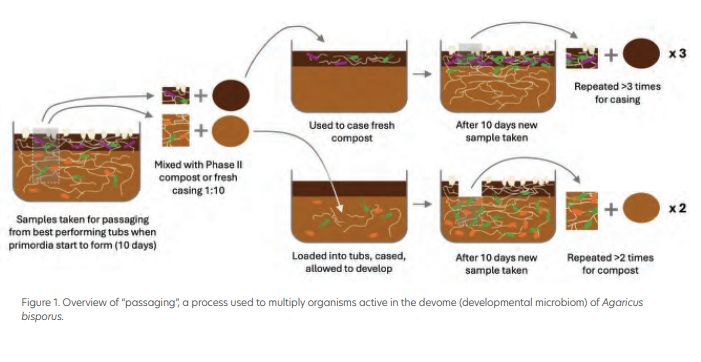
As fungi go, Agaricus mushrooms are surprisingly social. Unlike some other species, Agaricus bisporus not only grows better in the presence of other microorganisms, but may actually require them to grow, mature, and form harvestable mushrooms.

Monaghan Mushrooms is one of the largest mushroom-only companies in the world. Started by Ronnie Wilson in the early 1980s, it has grown to a company of more than 3,000 staff, with composting yards and growing facilities in Ireland, the UK and Canada. Like many mushroom businesses, Monaghan Mushrooms is facing the dual challenge of increasing productivity while also improving sustainability. To achieve this, the company invests strongly in Research and Development (R&D), and are heavily invested in the search for an alternative to peat.
Compost
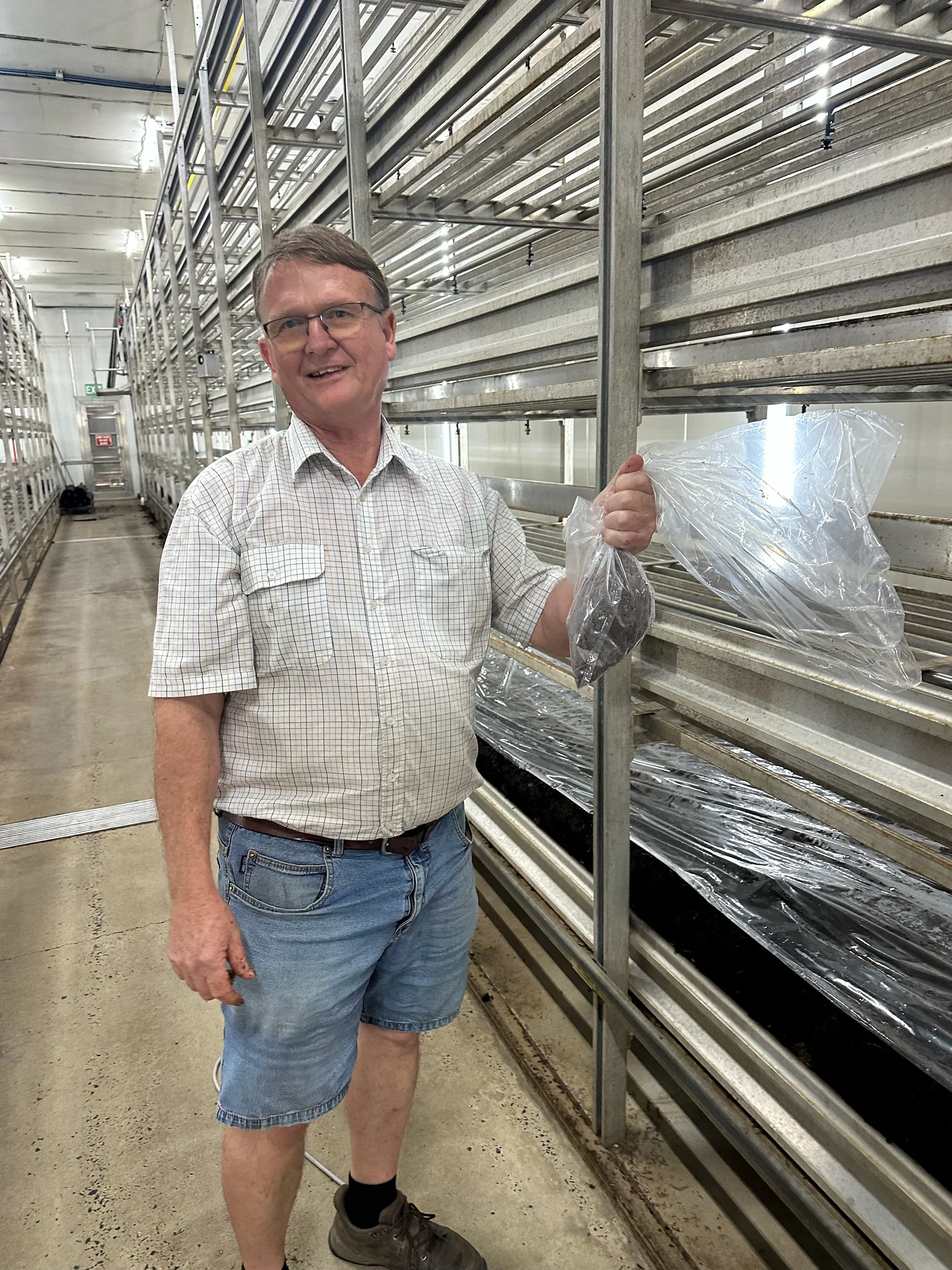
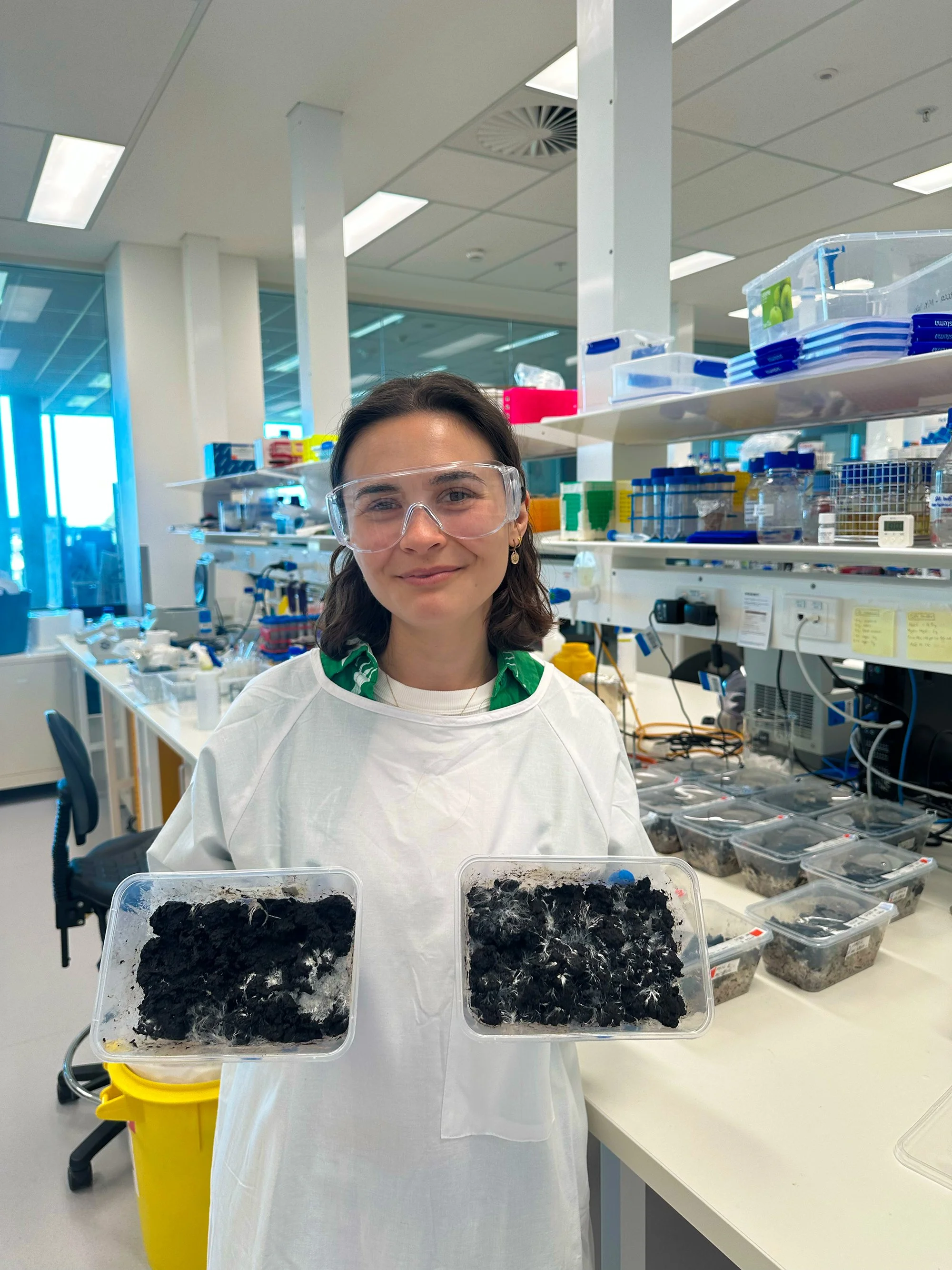
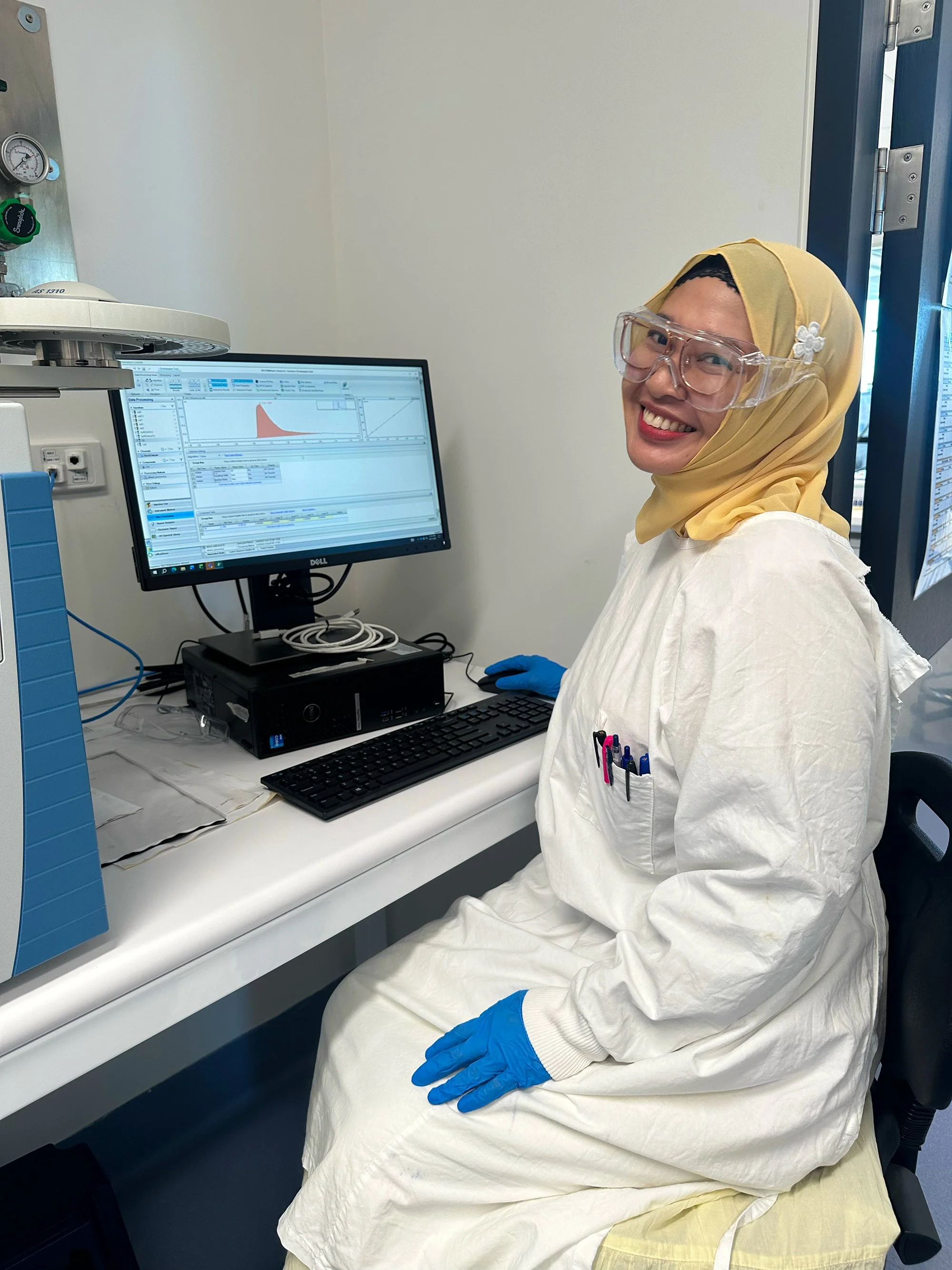

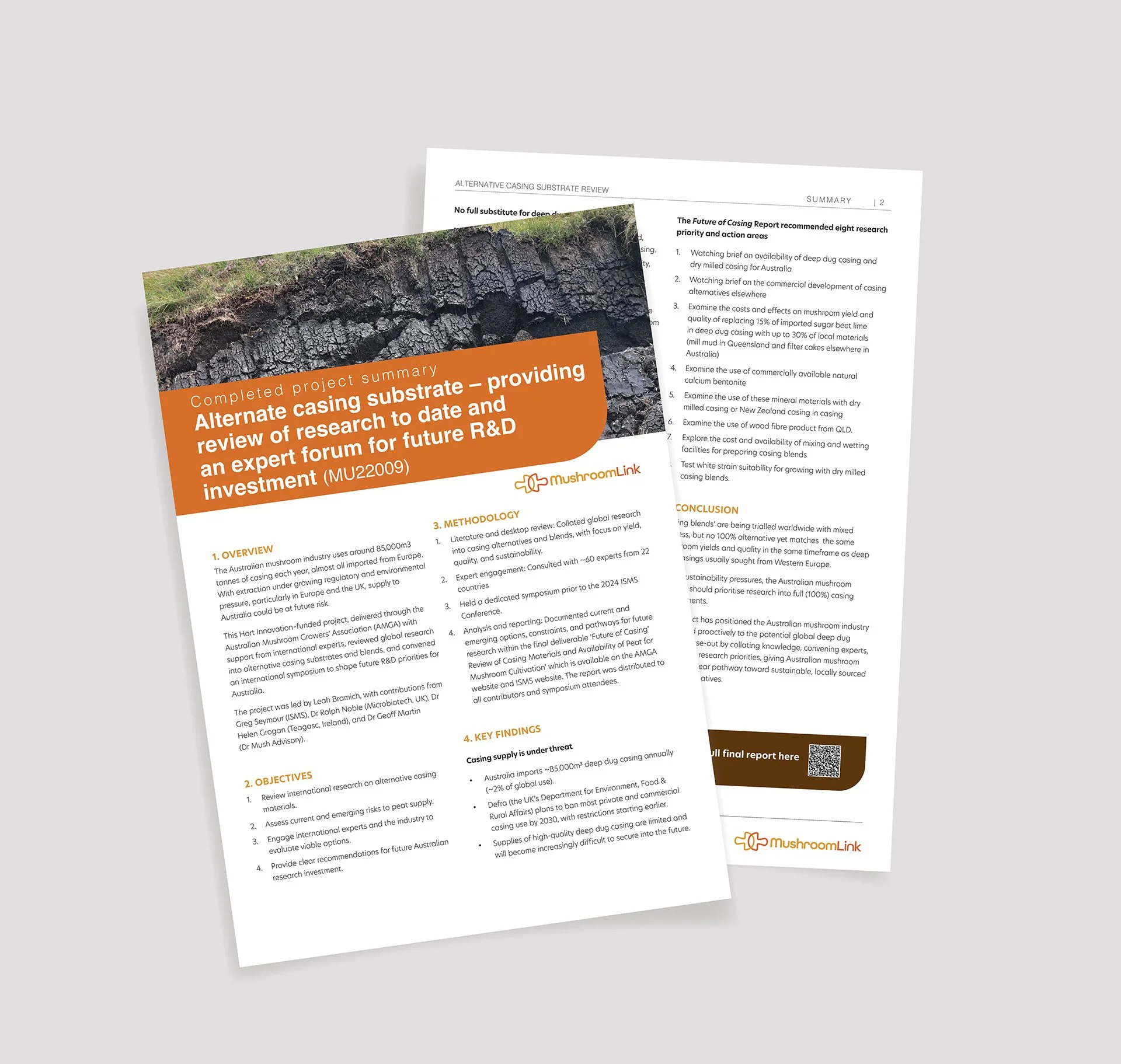


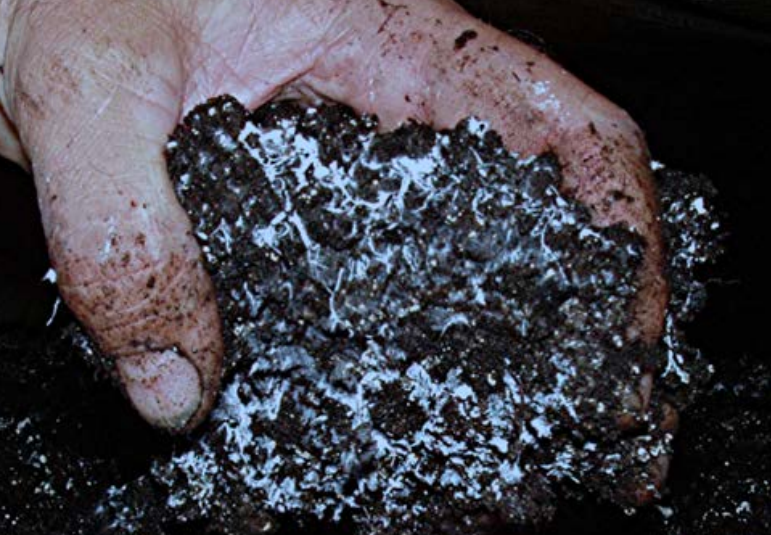
As the future of imported casing material is uncertain, a recent Hort Innovation levy-funded project reviewed the viability of existing alternatives and new research into future materials.

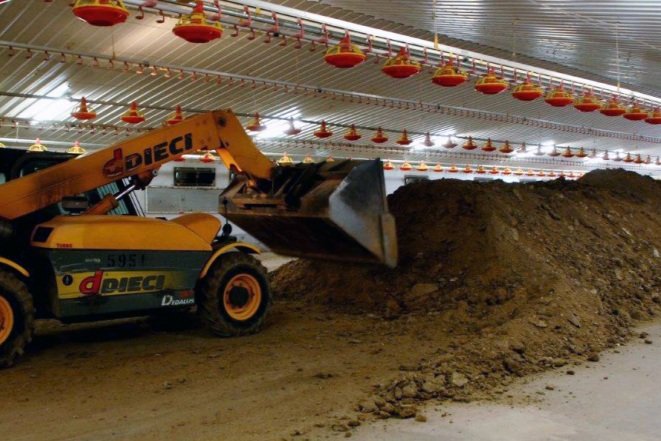
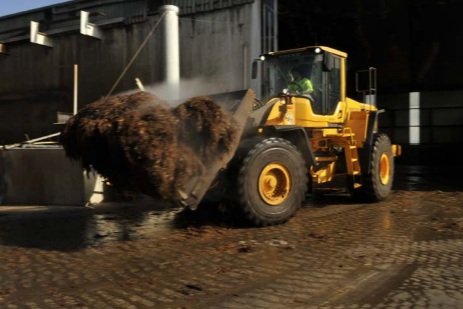
Once upon a time, Agaricus mushrooms were just another fungi, albeit widely distributed. They grew from Alaska to the Congo, and from coastal grasslands to mountain forests. This adaptivity was due in part to their natural diet, which was based on partially degraded leaf litter and other organic materials in soil. Farmed Agaricus feeds primarily on wheat straw, degrading the tough celluloses, hemicelluloses (xylan) and lignin that together form plant cell walls. One key purpose of composting is to strip away straw’s waxy cuticle and start to break down the linkages between carbohydrates and lignin, making these materials easier for the mycelium to digest – as would have occurred in the natural environment.

Project MU17004 (Optimising nitrogen transformations in mushroom production), led by Professor Michael Kertesz at the University of Sydney, aims to understand the influence of soil microbes on nitrogen transformations occurring in compost and casing during mushroom production. The objective of this ongoing project is to optimise nitrogen management, reducing losses from compost and improving yield and quality.

What is the academic/technical knowledge around ventilation within the compost matrix during cropping and its effect on mycelium growth and mushroom yield? We know through experience that the 'right' structure and density of the compost in the growing containers is important, but we have no measures or even consistent data about the goals we are aiming for.




Sustainability
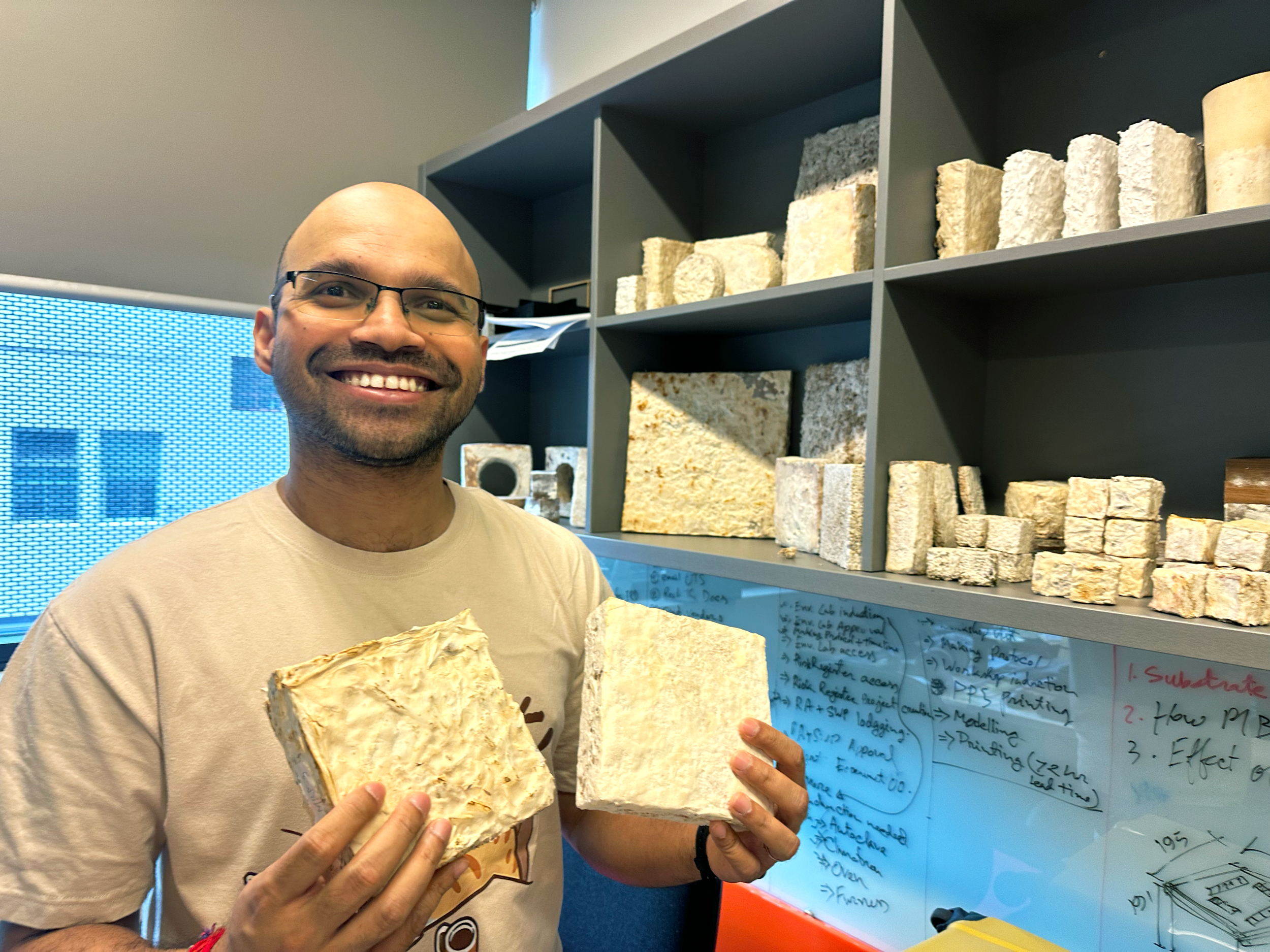

As the future of imported casing material is uncertain, a recent Hort Innovation levy-funded project reviewed the viability of existing alternatives and new research into future materials.

It’s one thing to claim sustainability, and quite another to prove it. A new R&D levy-funded project is bringing ‘life cycle thinking’ to the Australian mushroom industry, which will highlight the strengths and weaknesses in mushroom sustainability across the industry. With recent media attention and a new investigation by the ACCC exposing greenwashing, it is more important than ever to understand the real impact of a business and the effectiveness of any sustainability measures.








To maintain consumer appeal and a competitive edge, business must strive for that magical triple bottom line of social, economic and environmental sustainability. Striking that balance is an ongoing challenge due to a fickle global economy and increasingly unpredictable weather patterns.