compost Andrea Mason compost Andrea Mason

Is your compost moisture on target?

We’ve said it before, but mushrooms are basically water in fancy packaging. With water making up at least 90% of what you’re selling, it’s important to get substrate moisture levels right.

Approximately two-thirds of the water in first flush mushrooms has come from the compost. As the crop cycle continues, water is increasingly drawn from the casing. Yet the underlying compost remains a vital source of water as well as nutrients. 

MushroomLink recently spoke to Robert Tolson of Premier Mushrooms about the importance of getting compost moisture right. He also provided some practical tips on how to measure moisture in compost. 

Read More
compost Andrea Mason compost Andrea Mason

Identifying bacteriophages in mushroom compost

Bacteriophages may not be alive, but they are the most abundant biological agents on earth.

Bacteriophages are viruses that attack bacteria. The classic image of a bacteriophage looks a bit like a lunar landing module, with a capsid 'head' containing genetic material, collar and sheath, and a set of “legs” that attach to the bacterium’s surface. These (larger) phages have double stranded DNA genomes. However, others are simply a single, filamentous strand of coated DNA or RNA, or a tiny capsule.

Despite their abundance, bacteriophages are little studied. This is most likely because it is very difficult!

University of Sydney PhD candidate Rebecca Martin has taken on the considerable challenge of isolating and identifying bacteriophages present in mushroom compost.

Read More
compost Andrea Mason compost Andrea Mason

Exploring the effects of fatty acids in mushroom compost 

Just as for humans, in mushrooms fatty acids are precursors to hormones, involved in membrane function and many other purposes.

While mushrooms are low in fat, they contain many essential fatty acids, including relatively high levels of PUFAs. There is evidence from more than 50 years ago that adding oilseeds rich in fatty acids to compost increases mycelium vigour and yield.

Sarah Faulina, originally from Indonesia, is now one year into a PhD examining the effects of fatty acid supplements in mushroom compost. She aims to discover the mechanism by which fatty acids increase growth of the Agaricus mycelium. The overall objective is to achieve the same increases in yield as from oilseed supplementation, but at less expense.

Read More
compost Paulette Baumgartl compost Paulette Baumgartl

Growing beyond peat: the PEATLESS consortium

A new European consortium has launched the PEATLESS project, aimed at accelerating the transition to sustainable growing media with significantly reduced peat content. With the tagline #lesspeat, the initiative will develop, test and promote low-peat blends tailored for three key horticultural sectors: mushrooms, seedlings, and ornamentals.

Coordinated by the Technological Research Centre for Mushrooms of La Rioja (CTICH), the project brings together 12 partners from four countries — including research institutes, universities, industry players and policy makers.

Backed by €4.2 million from Horizon Europe and the Swiss State Secretariat for Education, Research and Innovation (SERI), the consortium will run from 2025– 2028.

Read more here

Read More
2 pager, compost Paulette Baumgartl 2 pager, compost Paulette Baumgartl

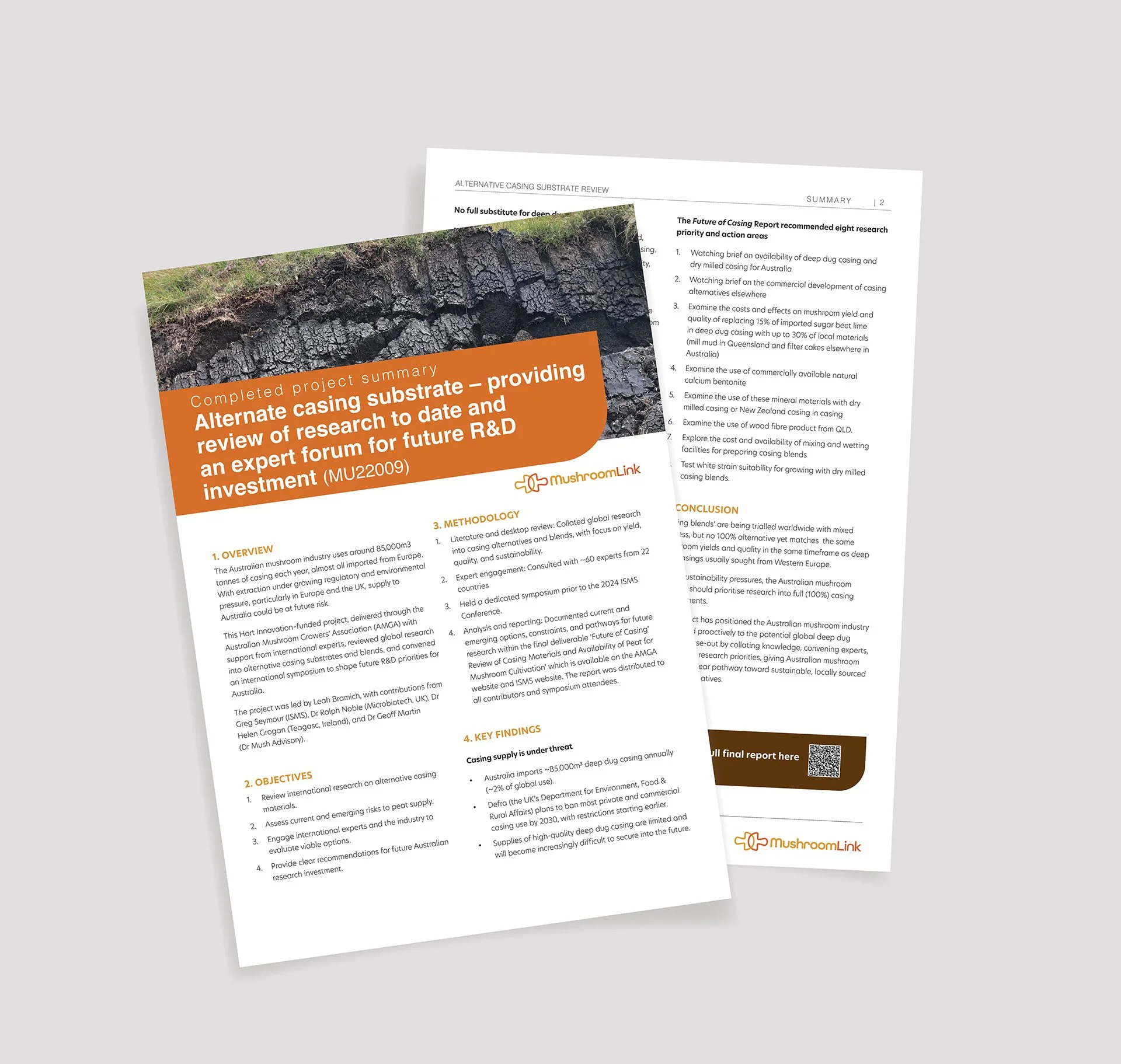
Final report summary: Alternate casing substrate – providing review of research to date and an expert forum for future R&D investment (MU22009)

We've pulled together a concise two-page summary of the Alternative casing substrate - review of research to date and expert forum for future R&D investment project to make key insights from the full Hort Innovation final report easier to access.

The summary highlights the objectives, methodology, key findings, and recommendations to help the Australian mushroom industry respond proactively to a deep dug casing phase-out, giving growers a clear pathway toward sustainable, locally sourced casing alternatives.

This summary also includes a link to the full final report.


Read More
factsheets, compost Guest User factsheets, compost Guest User

Fact sheet: Air porosity and moisture in compost

Balancing air and moisture in compost is crucial for optimal mushroom growth. This fact sheet explores how air-filled porosity (AFP) and bulk density impact compost quality, mycelium development, and water availability. Learn about the key factors influencing AFP, the role of different straw types, and how compost structure affects yield throughout cropping.

Click here to download the factsheet

Read More
compost Izumi Kageyama compost Izumi Kageyama

Studying the microscopic metropolis

Dr Michael Kertesz and Dr Meghann Thai, together with Honours project students, have been studying the microbiological goings-on inside mushroom compost, seeking to understand species diversity and richness, nutrient pathways, nutrient inputs/losses and a whole lot more. These comprehensive investigations have yielded a wealth of data that provides valuable insights into the diverse, rich, and varied processes taking place in compost. By understanding processes that are invisible to the naked eye, this research opens a window into their complexity and significance.

Click here to read the full article on MushroomLink

Read More
compost, sustainability Guest User compost, sustainability Guest User

The Future of Casing

As the future of imported casing material is uncertain, a recent Hort Innovation levy-funded project reviewed the viability of existing alternatives and new research into future materials.

As the future of imported casing material is uncertain, a recent Hort Innovation levy-funded project reviewed the viability of existing alternatives and new research into future materials.

Click here to read the full article in MushroomLink.

Read More
compost Guest User compost Guest User

Lignin Removal

Once upon a time, Agaricus mushrooms were just another fungi, albeit widely distributed. They grew from Alaska to the Congo, and from coastal grasslands to mountain forests. This adaptivity was due in part to their natural diet, which was based on partially degraded leaf litter and other organic materials in soil. Farmed Agaricus feeds primarily on wheat straw, degrading the tough celluloses, hemicelluloses (xylan) and lignin that together form plant cell walls. One key purpose of composting is to strip away straw’s waxy cuticle and start to break down the linkages between carbohydrates and lignin, making these materials easier for the mycelium to digest – as would have occurred in the natural environment.

Once upon a time, Agaricus mushrooms were just another fungi, albeit widely distributed. They grew from Alaska to the Congo, and from coastal grasslands to mountain forests. This adaptivity was due in part to their natural diet, which was based on partially degraded leaf litter and other organic materials in soil. Farmed Agaricus feeds primarily on wheat straw, degrading the tough celluloses, hemicelluloses (xylan) and lignin that together form plant cell walls. One key purpose of composting is to strip away straw’s waxy cuticle and start to break down the linkages between carbohydrates and lignin, making these materials easier for the mycelium to digest – as would have occurred in the natural environment.

Click here to read the full article.

Read More
compost Guest User compost Guest User

Testing the effects of nitrogen

Project MU17004 (Optimising nitrogen transformations in mushroom production), led by Professor Michael Kertesz at the University of Sydney, aims to understand the influence of soil microbes on nitrogen transformations occurring in compost and casing during mushroom production. The objective of this ongoing project is to optimise nitrogen management, reducing losses from compost and improving yield and quality.

Project MU17004 (Optimising nitrogen transformations in mushroom production), led by Professor Michael Kertesz at the University of Sydney, aims to understand the influence of soil microbes on nitrogen transformations occurring in compost and casing during mushroom production. The objective of this ongoing project is to optimise nitrogen management, reducing losses from compost and improving yield and quality.

Click here for the full article

Read More
compost Guest User compost Guest User

Balancing air and moisture within compost

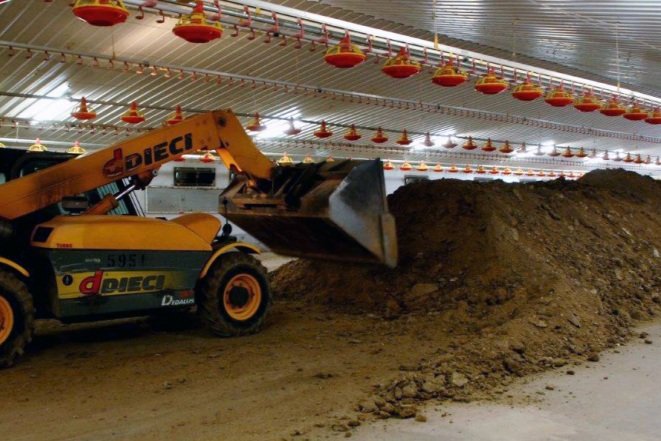
What is the academic/technical knowledge around ventilation within the compost matrix during cropping and its effect on mycelium growth and mushroom yield? We know through experience that the 'right' structure and density of the compost in the growing containers is important, but we have no measures or even consistent data about the goals we are aiming for.

What is the academic/technical knowledge around ventilation within the compost matrix during cropping and its effect on mycelium growth and mushroom yield? We know through experience that the 'right' structure and density of the compost in the growing containers is important, but we have no measures or even consistent data about the goals we are aiming for.
Click here for the full article in MushroomLink

Read More
factsheets, growing - resources, compost Guest User factsheets, growing - resources, compost Guest User

MushroomLink fact sheet: Nitrogen and compost

What is the role of nitrogen in compost, how does it transform or ‘get lost’ from Phase I through to cropping, and what are the key considerations when adding compost to boost nitrogen in the substrate?

Click here to download the fact sheet

Read More
compost Izumi Kageyama compost Izumi Kageyama

Alternative casings and a sustainable mushroom industry

Mushrooms are a low impact food. As vertical farms, their land footprint is small, and energy and water inputs into mushroom crops are much lower than comparable foods. Consequently, mushrooms have an excellent CO2eq rating. This ‘green’ image, coupled with great taste and an ever-growing list of health benefits, weaves a sweet narrative of mushrooms as a sustainable food source for a growing world population. There is just one little snag. Casing, or more specifically, peat casing.

Click here to read the article

Read More
compost Izumi Kageyama compost Izumi Kageyama

Poultry litter - More than just a nitrogen source

The well-documented cholesterol-lowering effect of oats has been certified by nutritional regulators
globally since the late 1990s. Subsequent studies and clinical trials have shown consistent results that confirm, and even boost, the original claims. This high-level health claim has driven an increase in the consumption of oats globally1. Beta-glucan, the compound responsible for lowering cholesterol, is famously present in oat and barley grains. However, its presence in mushrooms is less well known.

Click here to read the article

Read More
quality, compost Izumi Kageyama quality, compost Izumi Kageyama

Feeding mushrooms - The ‘ins’ and ‘outs’ of nitrogen in mushroom compost

While protein is a valuable portion of the dry matter (DM) in mushrooms, its content is quite variable, ranging from 14-30%. Dry matter itself ranges from a low as 7% up to 14%. High DM content and, therefore, high protein content, is associated with firmer mushrooms and improved shelf life.

Click here to read the article

Read More
growing - projects, compost, growing Guest User growing - projects, compost, growing Guest User

MU17004 - Optimising nitrogen transformations in mushroom production

Key Delivery partner: The university of sydney

This project will ultimately help mushroom growers to optimise the rate and timing of nitrogen additions, to achieve maximum yield and nutritional value.

The project team are currently exploring the fate of nitrogen used in mushroom production and composting, including developing a better understanding the microorganisms that are involved in transforming the nitrogen that is added throughout the mushroom production process into other forms. They are also looking at ways and timings to maximise nitrogen use efficiency and promote nitrogen retention for composting, and more. A best practice guide for growers will be produced out of the project findings.

Project outputs:

Australian Mushrooms Journal, Spring 2019 edition page 30

Read More
growing - projects, compost Guest User growing - projects, compost Guest User

MU17006 - Developing a database of bio-markers for compost quality control to maximise mushroom production yield

Key delivery partner: The University of Sydney

The quality and yield of button mushroom crops are critically dependent on the quality of compost used. Beginning in June 2019, this investment is exploring how microbial populations within compost can be used to understand, measure and manipulate compost quality.

The project team’s work involves investigating microbial populations across a range of mushroom composting facilities. This includes looking at the microbial population dynamics at different points along the composting timeline, how they align with other compost quality indicators and correlating everything back to mushroom crop yield and quality.

The research will culminate in a database of compost ‘bio-markers’ (microbe indicators) for the industry, which will be able to be used to assist in maximising productivity and crop outcomes.

Project outputs

Australian Mushrooms Journal, spring 2019 edition page 32

Read More
webinars, compost Guest User webinars, compost Guest User

Australian Mushroom Industry - Can nitrogen be better managed in compost production

Button mushrooms contain high levels of minerals, vitamins and antioxidants, but are also an excellent source of protein. With 19 - 35% protein per gram of dry weight, they contain more protein than rice (7.3%), wheat (13 %) or milk (25%), and the high content of essential amino acids also means that button mushroom proteins are 90-98% as nutritious as most meat protein.

The nitrogen required to build these proteins comes from the compost, partly from raw materials such as manure, and partly from supplements added later in the process. The carbon:nitrogen ratio in the starting compost mix is usually set to between 30:1 and 35:1, which is optimal for growth of the microbes that convert the straw into productive compost, but only about 12-15% of this nitrogen finishes up in the mushroom crop that goes to market.

This webinar will discuss how nitrogen is transformed into mushroom protein during composting and cropping, where losses occur, and how changes in starting materials or composting processes might be used to increase compost productivity and the nutritional value of the mushroom crop.

Read More
webinars, compost, sustainability Guest User webinars, compost, sustainability Guest User

Recycled organics as an alternative to peat in mushroom casing

The Australian mushroom industry uses approximately 25,000 tonnes of peat casing every year. Mostly imported from Europe or Canada at a cost of $300 per tonne, peat is both an expensive and limited resource.

Compost made from recycled organics is locally available and cheaper than peat.

Join Adam Goldwater from Applied Horticultural Research for a webinar where he will present the results of the recent trials of commercially viable white mushroom crops cased with blends of composted recycled organics and peat.

This is a Waste Less Recycle More initiative funded from the waste levy.

Read More